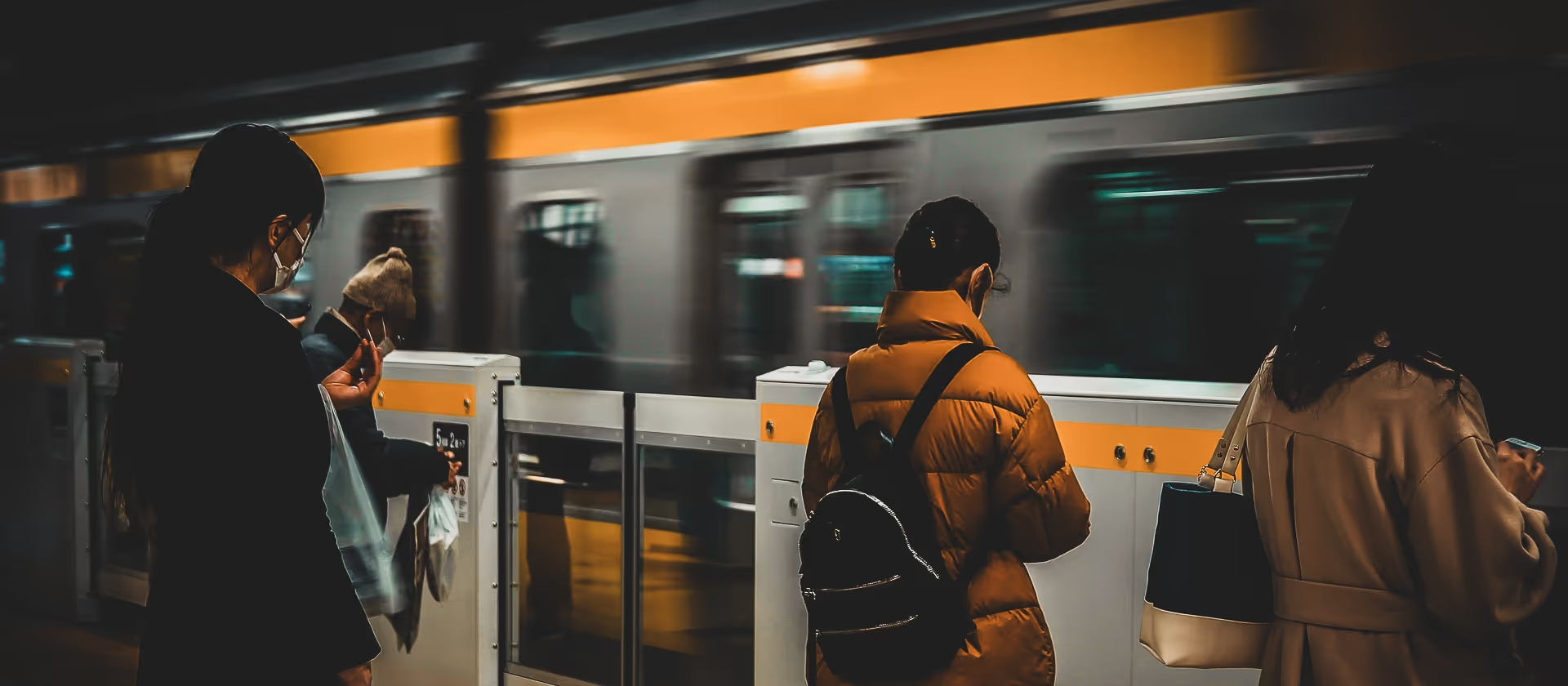
This guide outlines the essentials of getting around Tokyo using its highly efficient public transportation system. Tokyo’s metro networks, operated by Tokyo Metro and Toei Subway, connect major business and sightseeing areas like Shibuya, Ginza, Roppongi, Omotesando, Ueno, and Asakusa, offering reliable and easy-to-navigate routes for visitors.

Tokyo’s subway system is operated by both Tokyo Metro and Toei Subway.
It covers major sightseeing spots and business districts such as Shibuya, Ginza, Roppongi, Akasaka, Omotesando, Ueno, and Asakusa.
Features:
Highly punctual
Clear English signage
Easy transfers
TEAMZ SUMMIT Tickets
Suitable for all travelers
JR Yamanote Line (Loop Line)
A circular line connecting key hubs such as Tokyo Station, Ginza, Shinagawa, Shibuya, Shinjuku, Ikebukuro, Ueno, and Akihabara.
Ideal for business travelers who need fast and efficient access across major districts.
JR Chuo Line / Sobu Line / Other JR Routes
Useful for longer-distance travel or reaching areas around the event venue and outer-city zones.
Private railway companies + Tokyo Metro
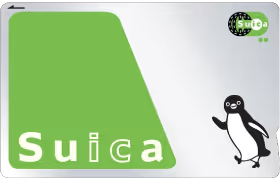
Usage is almost identical to Suica
Issuer: JR East
Subway / buses / trains
Convenience stores
Vending machines
Some restaurants and small shops
Avoid peak hours (7:00–9:00 / 17:00–19:00)
Trains in Japan are extremely punctual (plan your route ahead)
Google Maps and Apple Maps provide real-time transit guidance
Use the same card when tapping in and out of stations
Taxis are relatively expensive but useful late at night or after conference dinners
For group travel, consider booking a charter bus for business transportation
All-in-one route and transfer search
Great for travelers familiar with global ride-hailing apps
English interface & international credit card support